TWINT direct debit for your business
Your customers already pay for everything with TWINT. Soon, they’ll also be able to pay bills that they previously settled via LSV, a payment method that will be discontinued at the end of September 2028. TWINT direct debit is a fully digital solution for recurring payments supported by Switzerland’s largest banks, and it will be available from 2027.
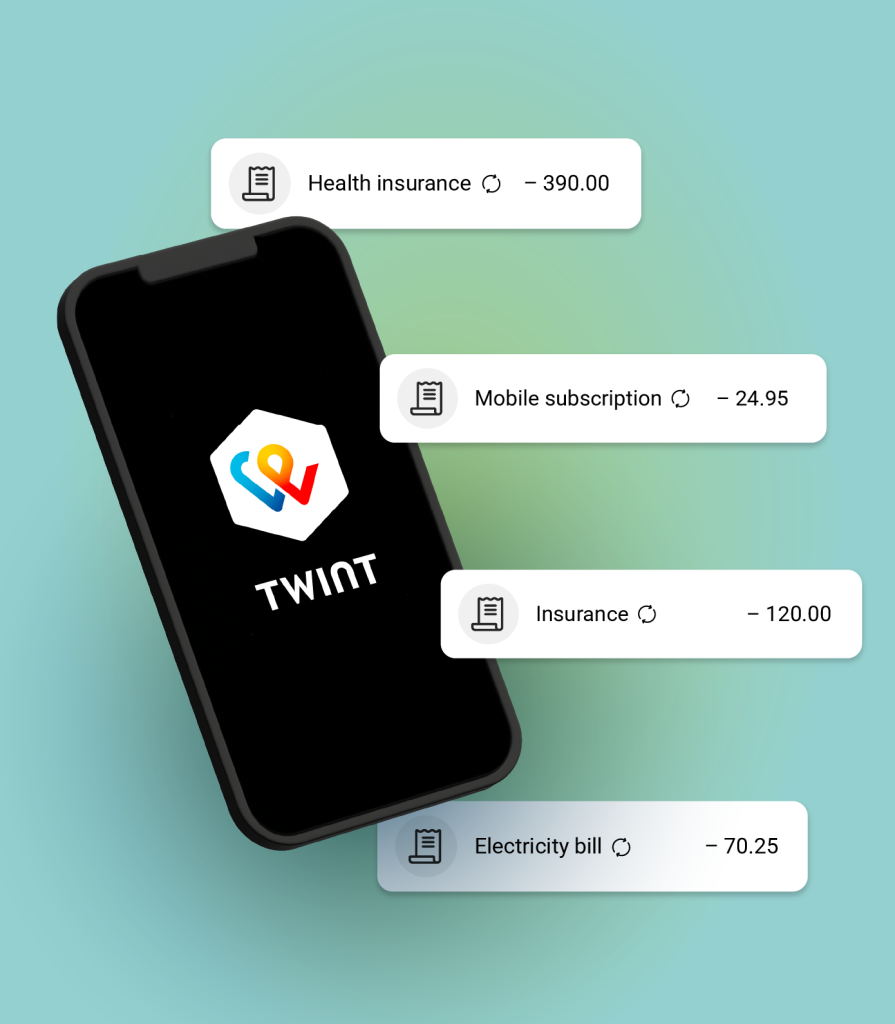
Who is TWINT direct debit suitable for?
All businesses that use LSV+ – in other words, all businesses that issue automated and recurring bills. For example:
- local authorities,
- non-profit and social organisations,
- mortgage and credit providers,
- property management companies,
- media and publishing houses,
- public transport operators,
- electricity suppliers,
- telecommunications providers,
- clubs and associations, and
- insurance companies and health insurance funds.
Billing platforms, producers of accounting software and ERP providers that natively integrate TWINT direct debit can gain a competitive advantage. That’s because, as first movers, they seamlessly integrate the easiest way to issue and pay recurring bills into their solutions.
Benefits of TWINT direct debit
Businesses can improve the efficiency of their direct debit-based billing and payment processes with little effort.
LSV+ will be definitively discontinued at the end of September 2028. Businesses that collect their recurring bills by LSV+ now have to think about a solution for the future. Switching to TWINT direct debit is straightforward, because LSV+ mandates can be migrated easily at many banks. Get in touch with your main bank now.
Automated collection and credits with the correct value date ensure a stable and predictable cash flow, minimise the administrative workload of reminders and reduce the risk of default.
More than 6 million people use TWINT every day, for example at the checkout or while shopping online. For them, paying with TWINT is part and parcel of everyday life. This habit will ensure a high level of acceptance for TWINT direct debit among bill recipients from day one.
TWINT direct debit uses the same high-performance technical infrastructure as the TWINT app, which executed 901 million transactions in 2025. All data is transmitted in encrypted form and processed and stored in a highly secure data centre in Switzerland.
How your customers pay
Bill recipients only need to set up TWINT direct debit once, then they never have to think about it again. Here’s how easy it is for them to pay recurring bills:
- You send your customers an invitation with a link or QR code
- They set up your TWINT direct debit mandate
- They automatically receive a push notification a few days before execution
- The amount is automatically debited from their account and credited to you on the day of execution
Your customers have a complete overview of their scheduled payments and paid bills and can file an objection within 30 days.
Your next step
TWINT direct debit is set to launch in 2027. Further information to help you plan will follow. Prepare to digitise and optimise your invoicing processes from start to finish – for your benefit and that of your customers.
Questions? Answers!
Do you have questions about TWINT direct debit? You’ll find answers to frequently asked questions in our FAQs.